
 Our Editorial Team — Certified Financial Planner and Accredited Investment Fiduciary




Quick Verdict: Best Gold Backed IRA Companies at a Glance
Bottom line up front: Augusta Precious Metals is the best gold backed IRA company for 2026 — A+ BBB, $250/yr flat fee, $50,000 minimum, lifetime buyback guarantee, and virtually zero unresolved complaints. Goldco ranks #2 for accounts under $50K (A+ BBB, $25,000 minimum). American Hartford Gold is best for beginners ($10,000 minimum, no first-year fees).
Gold backed IRA minimum investments range from $2,000 (Noble Gold) to $50,000 (Augusta). Annual all-in costs: $175–$350/year. All top 5 companies support 401(k), IRA, 403(b), and TSP rollovers with no tax penalty when done as a direct transfer.

How We Ranked Gold Backed IRA Companies (Our Methodology)
We scored 27 companies across 8 criteria; only five earned an A+ BBB rating AND a verified buyback guarantee. Our evaluation covered: fee transparency (all fees published upfront in writing), IRS-eligible metal inventory (breadth of gold, silver, platinum, and palladium meeting IRC §408(m) fineness), BBB complaint resolution rate, custodian partnerships, buyback program terms (guaranteed at competitive near-spot pricing), storage options (segregated vs. non-segregated at IRS-approved depositories), rollover processing speed, and customer support quality.
Each company was scored on a 100-point scale. We verified BBB and BCA ratings directly, reviewed Trustpilot scores (minimum 100 verified reviews required), and obtained fee schedules by requesting investor kits. Companies that refused to disclose all-in fees were automatically disqualified.
Compensation Disclosure: This site may receive referral compensation from some gold IRA companies listed. This does not influence our rankings or editorial conclusions.
What Is a Gold-Backed IRA? Definition, Tax Rules and How It Works
A gold-backed IRA is a self-directed Individual Retirement Account (SDIRA) that holds IRS-approved physical precious metals — gold, silver, platinum, or palladium — instead of paper assets like stocks or bonds. It operates under the same federal tax rules as a traditional or Roth IRA, while adding a physical asset layer that hedges against dollar devaluation, equity market crashes, and systemic banking risk.
Unlike a standard brokerage IRA, a gold backed IRA requires three parties: a self-directed IRA custodian (administers the account, files IRS Form 5498), a precious metals dealer (sells IRS-approved coins and bars), and an IRS-approved depository (Delaware Depository or Brinks Global Services) for vault storage.
Tax advantages are identical to conventional IRAs: traditional gold IRAs offer tax-deferred growth with deductible contributions; Roth gold IRAs use after-tax dollars but provide tax-free qualified distributions. The 2026 contribution limit is $7,000 ($8,000 if age 50+). Required Minimum Distributions begin at age 73 under the SECURE 2.0 Act.
What Is the Downside of a Gold IRA? Honest Risks Explained
The main downsides of a gold backed IRA are higher annual fees, lower liquidity, no income generation, and strict IRS storage rules. Here is an honest assessment of every risk before you open an account.
Higher Annual Fees vs. Standard IRAs
A gold backed IRA costs $175–$350 per year in total fees (setup + custodian + storage), compared to near-zero for a Vanguard index fund IRA. Over 20 years, this cost difference compounds significantly. Augusta's flat $250/year is the lowest among major providers.
Gold Generates No Income
Physical gold pays no dividends, interest, or rental income. All returns come from price appreciation. For income-focused retirees, this is a significant limitation compared to dividend stocks or bonds.
Lower Liquidity Than Paper Assets
Selling gold IRA holdings takes 3–5 business days and involves a bid-ask spread. Stock ETFs can be sold in seconds. If you need quick access to cash in retirement, a gold IRA is less flexible.
Mandatory IRS Depository Storage
IRS rules prohibit home storage of IRA gold. All metals must be held at an approved depository (IRC §408(m)). Violating this rule triggers immediate tax liability plus a 10% early-withdrawal penalty if you are under age 59½.
Dealer Premium Markups
You pay 3–6% above spot price when purchasing bullion through a dealer. Some less reputable companies charge 20–40% markups on exclusive numismatic coins. Always compare the dealer's premium to current market prices.
Price Volatility
Gold prices are volatile. Gold dropped over 40% from 2011 to 2015. While it is a long-term store of value, investors who need stable short-term value should not hold a large percentage in gold.
What If I Invested $10,000 in Gold 20 Years Ago? Real Return Data
$10,000 invested in gold 20 years ago (April 2006) would be worth approximately $62,000–$68,000 today, based on gold's price increase from roughly $600/oz in 2006 to around $3,100/oz in early 2026 — a gain of over 400%.
For comparison, $10,000 in the S&P 500 index in April 2006 would be worth approximately $55,000–$65,000 over the same period (depending on dividends reinvested). Gold actually outperformed the stock market on a raw price basis over this specific 20-year window — largely because it included the 2008 financial crisis, the 2011 peak, and the 2020 COVID surge.
Key context: gold's best decades were the 1970s and 2000s (crisis periods). The 1980s and 1990s saw gold significantly underperform equities. This is why financial advisors typically recommend gold as 5–20% of a retirement portfolio rather than a primary holding.
A $10,000 gold IRA investment today with $250/year in fees over 20 years would cost approximately $5,000 in total fees — a meaningful drag on returns that must be considered when comparing gold IRAs to low-cost index fund alternatives.
Why Did Warren Buffett Not Invest in Gold? The Case Against Gold IRAs
Warren Buffett has been consistently skeptical of gold as an investment. His core argument: gold is a non-productive asset. Unlike stocks (ownership in businesses that generate revenue), bonds (loans that pay interest), or real estate (generates rent), gold just sits in a vault and produces nothing.
Buffett's preferred alternative: ownership of productive businesses through stocks. His famous 2011 comparison showed that all the world's gold at the time ($9.6 trillion) could buy all U.S. farmland plus 16 Exxon Mobils — assets that would continuously generate income. Gold would just remain a cube of metal.
The counter-argument for gold backed IRAs: Buffett invests through Berkshire Hathaway with unlimited time horizon and no personal liquidity needs. Most retirees need crisis protection and inflation hedging that gold provides. In 2022, when both stocks AND bonds fell simultaneously, gold preserved capital — something Buffett's portfolio did not avoid either.
Our view: Buffett is right that gold should not be your primary retirement holding. But 5–15% in a gold backed IRA provides genuine diversification benefits that even value investors acknowledge. The key is not choosing between gold and stocks — it is using gold as a hedge within a diversified retirement strategy.
Gold IRA Fees Compared: Setup, Annual Custodian and Storage Costs
Total annual gold backed IRA fees range $175–$350/year. Always request a written all-in fee schedule before opening an account.
Fee Breakdown by Category
- One-time setup fee: $50–$150 (Augusta: $50; some companies waive this)
- Annual custodian maintenance fee: $75–$175 (Augusta: $100; Equity Trust: $125)
- Annual depository storage: $100–$150 segregated / $80–$100 non-segregated
- Wire transfer fees: $25–$50 per transaction (often not disclosed upfront)
- Account termination fee: $150–$250 (varies by custodian)
Total All-In Annual Cost by Provider
- Augusta Precious Metals: $250/year flat-rate — lowest among top providers
- Goldco: $260–$300/year depending on account size
- American Hartford Gold: First year free, then $180–$250/year
- Birch Gold Group: $200–$300/year with segregated storage
- Noble Gold: $225–$275/year
Hidden fee alert: Dealer premiums above spot price (3–6% for bullion; some companies charge 20–40% on numismatic coins). This is separate from annual fees and is often the largest one-time cost when opening a gold backed IRA.
Gold IRA Minimum Investment: How Much Do You Need to Start?
Gold backed IRA minimum investments range from $2,000 to $50,000 depending on the company. Here are the minimums for our top-rated providers:
- Augusta Precious Metals: $50,000 minimum — best for larger accounts, lowest annual fees
- Goldco: $25,000 minimum — waives setup fee above $50,000
- American Hartford Gold: $10,000 minimum — best for beginners, no first-year fees
- Birch Gold Group: $10,000 minimum — accepts silver and palladium diversification
- Noble Gold: $2,000 minimum — lowest barrier to entry, ideal for testing
Our recommendation: Accounts under $25,000 should seriously evaluate whether the annual fees ($175–$350/year) are worth it compared to a gold ETF (e.g., GLD or IAU at 0.25% annually). The fee-to-portfolio ratio becomes unfavorable below this threshold.
IRS annual contribution limits: $7,000/year ($8,000 if age 50+) for new contributions. There is no limit on rollover amounts from 401(k), 403(b), TSP, or existing IRA accounts — direct rollovers are tax-free and penalty-free.
IRS Rules for Gold Backed IRAs: Eligible Metals, Fineness and Storage
Gold held in an IRA must meet .9950 minimum fineness under IRC §408(m). Home storage is strictly prohibited. IRS requirements by metal type:
- Gold: .9950 fineness (American Gold Eagles exempt at .9167 by statute)
- Silver: .9990 fineness (American Silver Eagles, Canadian Maple Leafs)
- Platinum: .9995 fineness (American Platinum Eagles)
- Palladium: .9995 fineness (Canadian Palladium Maple Leafs)
Prohibited Transactions (IRC §4975)
You cannot store IRA metals at home, use them personally, or purchase from a disqualified person (yourself, spouse, or lineal descendants). Violations trigger immediate distribution treatment and a 10% early-withdrawal penalty if under age 59½. Numismatic (collectible) coins are prohibited — only bullion meeting fineness requirements qualifies.
RMD Rules for Gold IRAs
Gold backed IRAs are subject to Required Minimum Distributions starting at age 73 (SECURE 2.0 Act). You may take an in-kind distribution (physical metals at fair market value) or liquidate for cash. IRS Form 5498 reports annual fair market value; Form 1099-R reports distributions.
Gold IRA Rollover Guide: 401(k), IRA, TSP and 403(b) Transfers Explained
A direct rollover from a 401(k) or existing IRA to a gold backed IRA is tax-free and penalty-free when executed as a trustee-to-trustee transfer.
Direct vs. Indirect Rollover
A direct rollover moves funds trustee-to-trustee with no tax withholding and no 60-day deadline — the safest and most common method. An indirect rollover sends a check to you with 20% withheld for taxes; you have 60 days to redeposit the full pre-withholding amount. Missing the 60-day deadline triggers income taxes plus a 10% penalty if under age 59½.
Eligible Account Types for Gold IRA Rollover
- 401(k): Permitted after leaving employer, reaching 59½, or qualifying for in-service distribution
- Traditional IRA: Transfer anytime with no restrictions
- 403(b): Same rules as 401(k); common for teachers, nonprofits, and healthcare workers
- TSP (Thrift Savings Plan): After separation from federal service or at age 59½
- Roth IRA: Roth-to-Roth transfer is tax-free; converting Traditional to Roth triggers income tax
Rollover timeline: 2–4 weeks from initiating the request to funded account. Augusta Precious Metals and Goldco both handle the paperwork and coordinate with your existing plan provider at no additional charge.
Gold Backed IRA Pros and Cons: Is It Right for Your Retirement?
A gold backed IRA suits investors seeking inflation protection and portfolio diversification. It is not right for everyone — particularly those with small accounts, near-term income needs, or short time horizons.
Pros of a Gold Backed IRA
- Inflation hedge: gold maintains purchasing power during high inflation and dollar devaluation
- Portfolio diversification: low correlation with stocks and bonds reduces overall volatility
- Same tax advantages as conventional IRAs (traditional or Roth)
- Tangible physical asset: cannot be hacked, diluted, or wiped out by corporate bankruptcy
- Crisis protection: gold outperformed equities in 2008, 2020, and during 2022's simultaneous stock-bond decline
Cons of a Gold Backed IRA
- Higher fees: $175–$350/year vs. near-zero for index fund IRAs
- No dividends or interest income generated
- Lower liquidity: selling takes 3–5 business days
- IRS storage mandate: depository required, home storage prohibited
- Dealer premiums: 3–6% above spot price on purchases
- Price volatility: gold dropped 40%+ from 2011 to 2015
Best for: Investors 10–25 years from retirement wanting 5–20% physical asset allocation, account balance of $25,000+. Not for: Accounts under $25,000 (fees outweigh benefits), retirees needing income, or investors who cannot tolerate multi-year price declines.
Gold IRA vs. Physical Gold: Key Differences and Which Is Better
The main difference between a gold IRA and buying physical gold directly is tax treatment, storage rules, and accessibility.
Gold IRA Advantages
- Tax-deferred or tax-free growth (traditional or Roth IRA rules apply)
- Funded via rollover from existing 401(k) or IRA with no tax impact
- Ideal for long-term retirement savings with maximum tax efficiency
- Annual fees: $175–$350/year
Physical Gold (Direct Purchase) Advantages
- No annual custodian fees (only storage costs if using private vault)
- No contribution limits — buy as much as you want
- Can store at home or in a personal safe deposit box
- Immediate liquidity — sell to any coin dealer or online buyer
- Capital gains taxed at 28% collectibles rate
Our verdict: A gold backed IRA wins for retirement savings due to tax advantages and rollover flexibility. Direct physical gold wins for accessibility, simplicity, and accounts under $25,000 where IRA fee drag is significant. Many investors hold both — a gold IRA for tax-advantaged retirement savings and physical gold outside the IRA for emergency access.
How to Choose the Best Gold Backed IRA Company: 6 Key Criteria
The company you choose determines your fees, service quality, and exit options. Evaluate these six criteria before opening a gold backed IRA:
1. BBB and BCA Ratings
Look for A+ BBB rating with zero or near-zero unresolved complaints. Augusta Precious Metals and Goldco both hold A+ BBB with clean complaint records. Avoid any company with F rating or unresolved complaint patterns.
2. Full Fee Transparency
Request a complete written fee schedule including setup, annual custodian, annual storage, wire transfer, and termination fees. Companies that refuse to publish all-in costs upfront are a major red flag.
3. Verified Buyback Guarantee
Confirm the buyback program guarantees repurchase at competitive near-spot pricing with no holding period requirements. Augusta and Goldco both offer lifetime buyback guarantees.
4. Minimum Investment Match
Match the company minimum to your account size: Augusta $50,000, Goldco $25,000, American Hartford Gold $10,000, Noble Gold $2,000.
5. Custodian Partnerships
Top companies partner with established custodians (Equity Trust, STRATA Trust, Goldstar Trust). Verify the custodian is IRS-approved and holds FDIC insurance on cash holdings.
6. Educational Resources Without Sales Pressure
The best gold backed IRA companies offer free guides, webinars, and one-on-one consultations without high-pressure sales tactics. Augusta's web conference covers market conditions, IRS rules, and fee structures before you commit to anything.
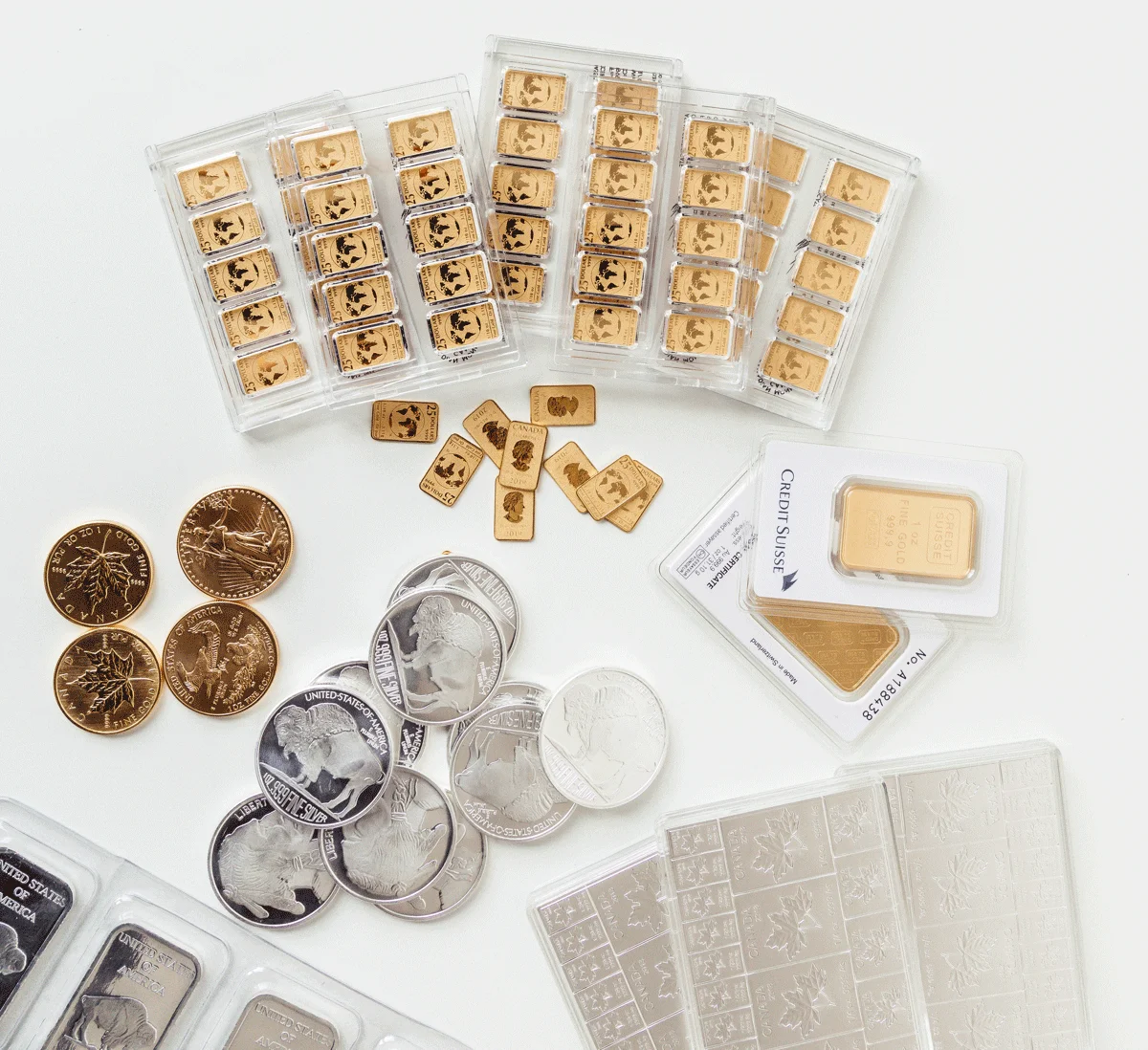
IRA-Approved Gold Products: Coins, Bars and Fineness Requirements
Not all gold qualifies for a gold backed IRA. The IRS requires specific fineness levels under IRC §408(m); numismatic (collectible) coins are prohibited regardless of gold content.
IRS-Approved Gold Coins and Bars
- American Gold Eagles (.9167 fine — IRS statutory exemption, most popular IRA coin)
- Canadian Gold Maple Leafs (.9999 fine — highest purity available)
- Australian Gold Kangaroos (.9999 fine)
- Austrian Gold Philharmonics (.9999 fine)
- PAMP Suisse gold bars (.9999 fine, LBMA-certified)
- Valcambi gold bars (.9999 fine)
- Credit Suisse gold bars (.9999 fine)
IRS-Approved Silver, Platinum and Palladium
- Silver: American Silver Eagles (.999), Canadian Maple Leafs (.9999), .999+ bars
- Platinum: American Platinum Eagles (.9995), Canadian Maple Leafs (.9995)
- Palladium: Canadian Palladium Maple Leafs (.9995)
What Is Prohibited in a Gold IRA
Numismatic coins (collectibles) are prohibited under IRC §408(m)(3). Common prohibited items: pre-1933 U.S. gold coins, South African Krugerrands (not IRA-eligible despite high purity), and any coin sold primarily for collector value. Beware dealers pushing 20–40% markup exclusive numismatic products — these violate IRS rules and expose you to immediate tax liability.
Gold IRA vs. 401(k): Key Differences for Retirement Investors
Gold IRAs and 401(k)s are both tax-advantaged retirement vehicles serving different portfolio purposes. Most advisors recommend holding both.
Asset Types
401(k) holds paper assets (stocks, bonds, target-date funds). Gold backed IRA holds physical precious metals at an IRS-approved depository. Holding both provides genuine diversification across asset classes.
Fee Comparison
Standard 401(k) with index funds: 0.03–0.10% expense ratio annually (near-zero). Gold IRA: $175–$350/year flat plus dealer premiums on purchase. This fee difference is the trade-off for physical asset protection.
Tax Treatment
Identical tax rules. Traditional: tax-deferred contributions and growth. Roth: tax-free qualified distributions. Same contribution limits ($7,000/$8,000 in 2026) and RMD rules (age 73). 401(k)-to-gold-IRA rollovers are non-taxable when done as direct transfers.
Long-Term Performance
Stocks deliver higher average long-term returns over 30+ year periods. Gold outperforms during financial crises, high inflation, and geopolitical instability. The low correlation between gold and equities reduces portfolio volatility — particularly valuable in the 5 years approaching and entering retirement.